Showing posts with label Florida. Show all posts

7/31/26

The City I Most Want to Visit in Each State, Part 2: Colorado to Georgia

This is the second post in a series. I recommend reading the introductory post first. Today I'll be picking the city in Colorado, Connecticut, Delaware, Florida, and Georgia that I most want to visit, then listing my top 2 attractions in each location. 


---------

The City I Most Want to Visit in Each State, Part 2: Colorado to Georgia


I would love to travel to Colorado Springs, Colorado. Olympic City USA is home to the Olympic and Paralympic Training Center and the Olympic committee headquarters, more than 20 national Olympic governing bodies, dozens of national sports organizations, and my top pick for attractions, the US Olympic and Paralympic Museum. I would also love to take the cog railway to Pikes Peak


The city I'd most like to visit in Connecticut is New Haven. I'd start my time at Yale University, specifically at the Peabody Museum. It looks incredible. I would also like to check out Lost in New Haven, which looks really unique and would be a good introduction to the area. 


On my next trip to Delaware, I'd most like to visit Wilmington. The are six units of First State National Historic Park; Wilmington is home to three of them. I'd start my visit at Fort Christina. I'd also plan to visit the small but charming Brandywine Zoo


It should be no surprise that the city I most want to visit in Florida is its capital, Tallahassee. We have been to 45 of the 50 state capitals and I'd love to see the rest. My priority would be the Florida Capitol and the Museum of Florida History


My top choice for a city to visit in Georgia is beautiful and historic Savannah. I would start by riding a full loop on Old Town Trolley Tours; we've taken Old Town Trolley Tours in multiple cities and always found them to provide an excellent overview to a city. After learning all about the city and seeing its most famous sites from the trolley, I would check out the American Prohibition Museum


-----


Did I miss any must-do attractions in these cities? Let me know in the comments what else I should do when I make it to these cities!

6/16/26

Perler Bead Lighthouse

My latest internet rabbit hole led me to lighthouses. I learned that there are 750+ standing lighthouses in the US, of which approximately 450 work. All are fully automated. There are lighthouses in 31 states; Michigan has the most by far. There is some debate about how to define what exactly a lighthouse is, but most experts agree that Michigan has around 129. Maine and New York each have around 65, followed by Massachusetts (52), California (45), Wisconsin (43), Washington (30), Florida (30), North Carolina (29), and Ohio (26). 

The vast majority of lighthouses are white for easy visibility. Some have colored patterns (usually black, red, or unpainted brick) called "daymarks" that provide a contrast with the sky and water for easy identification during daylight. Lighthouses come in a wide variety of shapes and styles. Rather than design a craft for one specific lighthouse, I decided to make a generic design that represents the hundreds of lighthouses in our country. Affiliate links below. 


Perler Bead Lighthouse


Materials:

Steps: 


Start by placing three black beads at the bottom center of the pegboard. Add five white beads on either side of the black beads. Repeat this same pattern for the next three rows up. Then add four rows of 13 white beads, then one row of 13 grey beads. 

Add two rows of 11 white beads centered over the grey row. Then make three rows with two white, two black, three white, two black, and two white. Add two more rows of 11 white beads, then 11 grey beads, then 11 black beads.

The next row up has 9 black beads. Then add three rows with one black, three yellow, one black, three yellow, and one black. The next row has 11 black beads. Add two rows of 7 black beads, then one row with 5 black beads, one row with 3 black beads, and a single black bead at the top. 


My pattern is easy to alter if you want to make a lighthouse that looks different. Just change out the colors to add daymarks, make it wider, make it taller (you'll need to use a second board), move the windows, etc. You can base your project on an existing lighthouse or design your own like I did!

3/5/26

Decoupage Tissue Paper Dolphin

I'm going to go out on a limb and guess that you like dolphins. Everyone likes dolphins, right? Three states like dolphins enough to have named them as their official State Saltwater Mammal (Florida), State Water Mammal (Mississippi), and State Marine Mammal (South Carolina). Read on for how to make a cool dolphin craft using tissue paper. Affiliate links below. 


Tissue Paper Dolphin


Materials:


Steps: 


Prepare the Bristol vellum. You will need a total of two sheets: a full sheet for the light blue and a half-sheet each for the dark blue and silver. 

Cut or tear a piece of light blue tissue paper so that it is slightly larger than the full sheet. Set it aside. Tear thin strips of dark blue tissue paper. Don't cut them; you want them to be irregular to mimic the movement of the ocean. (Remember - tissue paper has a grain!) Cut a piece of silver tissue paper that is slightly larger than the half-sheet of paper. 

Pour some Mod Podge into a cup and dilute it with a little bit of water (about 3 parts Mod Podge to 1 part water). Spread a coat of the watered-down Mod Podge onto a half-sheet of paper. You want it to be moist but not puddly. It is important that it is completely covered. Carefully lay the silver tissue paper onto the moist paper. Load the brush with more Mod Podge and paint a coat over the top of the tissue paper. Use the brush to smooth any wrinkles as best you can. Don't worry about any overhanging tissue paper. 

Use the same technique to apply the light blue tissue paper to the full sheet of paper. Wrinkles are probably going to happen; gently smooth them out if possible. Don't overwork the tissue paper or you'll risk tearing it. 

To make the water, it is easiest to work on one area at a time. Paint a coat of Mod Podge onto the bottom inch of the paper, lay down a strip of tissue paper, then paint over that to seal it. Again, don't worry about overhanging tissue paper. Add Mod Podge to the next section of the paper, then add the tissue paper, slightly overlapping the previous piece. Seal it. Repeat until you've covered the entire half-sheet. 

When all three colors are completely dry, use scissors to trim the excess tissue paper from all four sides of the light blue and from three of the four sides of the dark blue. Tear or cut the fourth side in the shape of waves. Glue the dark blue paper onto the light blue. (I trimmed mine down to a square because I like squares, but you don't have to do that.)

Draw or trace a dolphin on the back of the silver paper, then carefully cut it out. Make a dot for its eye. Apply foam mounting squares to the back of the dolphin, then position it onto the paper. 

1/28/26

The Best and the Worst of the 50 State Seals, Part 1

I had a lot of fun ranking the 50 state flags and then the 50 state quarters. Now it's time to tackle the state seals! 

The design of a state seal serves a completely different purpose than state flags or state quarters do. Unlike a state flag (which is usually viewed outdoors, at a distance, and thus should be simple in design, completely unique, and readily identifiable in all weather conditions) or a state quarter (always viewed up close, with the reverse design serving no real purpose other than to delight collectors and thus make money for the government), a state seal is used to authenticate official documents, government buildings, and other state property. It is not nearly as important that the design be unique or readily identifiable. 

State seals typically include images, symbols, and mottos that represent the history, identity, and values of that state. Most states have have official full-color and single-color versions. Variations of the seal are used for different governmental departments or positions. Some states have updated their seals multiple times over the course of their history; others are using the same seal as when they received statehood (or earlier). 

I will be grading each seal on scale of 0-10. I am considering two factors: 
  • Does the seal have an aesthetically pleasing design that makes good use of the space? (5 points)
  • Does the seal's design represent the history, identity, and values of the state? (5 points)

I'll be looking at the states alphabetically, so let's get started with Alabama. 


---------

Rating the State Seals: Alabama through Georgia


Alabama's seal was adopted in 1939. It features one of Alabama's most important resources, its major rivers, presented in a map of the state. I like that. I'm not particularly fond of anything else about the seal. I don't love the colors. It seems really weird to include other states in your state seal (although I'm amused that the Gulf of Mexico is labeled). I was not able to find any meaning the six stars; I assume they're just decorative. I'd rather see 11 smaller stars on each side, representing that Alabama is the 22nd state. 

Design 2, Representation 1 = 3


Alaska's state seal has been in use since 1910, long before statehood in 1959. The seal features the natural beauty of Alaska (the Northern Lights, mountains, forests, and waterways) and its industry (mining, railroads, shipping, timber, agriculture, and fishing). Overall, I like the design and the colors are nice. It represents the state very well. I question including train tracks that extend onto a short wooden pier (that doesn't seem safe) and I'm not sure why the close ship is entirely in silhouette. I wish the seal and fish were a little clearer on the dark blue background. While I'm fine with the font, the spacing of the words and the inconsistent kerning are pretty bad.  

Design 3, Representation 5 = 8


Arizona adopted its state seal at the time of statehood in 1912. I'm impressed; it looks surprisingly modern. I love the colors and how well they represent Arizona. The overall design is interesting and very well well-balanced. The design features each of Arizona's "Five C's" - copper, cattle, cotton, citrus, and climate, as well as the state motto and the date of admission. If I have to criticize anything, I would tweak the font slightly since some letters are heavier than others (compare the O and N in Arizona). But that is such a small detail that you can go ahead and forget that I even mentioned it. I love this seal. 

Design 5, Representation 5 = 10 


The state seal of Arkansas was adopted in 1907. It features an eagle with a scroll, arrows, and an olive branch (just like the Great Seal of the US), both an angel and a goddess, a circle of rays, a sword, and a shield with a steamboat, beehive, plow, and wheat. That is a lot of elements. And unfortunately, they don't say "Arkansas" to me. The design doesn't feel relevant to the state today, nor does it convey much about the state's history. I don't love the colors, nor the empty spot at the bottom of the text, where the date of admission would fit perfectly. The more I look at this seal, the less I like it. 

Design 1, Representation 0.5 = 1.5 


California's seal was adopted in 1849, with several minor changes since then. The seal features a grizzly bear (California's state animal), grapevines (representing the wine industry), grain (representing agriculture), a minor (representing the Gold Rush), and sailing ships (representing economic power). The goddess Athena is there because she was born an adult, just like California became a state without being a territory first. The seal shows the state motto and 31 stars, representing its admission as the 31st state. There's no question that the seal represents the state well. Overall, I like the design, the colors, and the decorative border. 

Design 4.5, Representation 5 = 9.5


The Colorado state seal was adopted in 1861 when Colorado was a territory; after statehood in 1876, they changed the text to "State" and added the date. The design features the Eye of Providence (just like the dollar bill), a Roman fasces (used to inflict punishment, symbolizing strength and authority), a shield with mountains and miner's tools, and a scroll with the state motto. The design of the seal is very well balanced and aesthetically pleasing, but I'd like it a lot better with more emphasis on the mountains and other natural beauty of the state and less on the Eye and the weapon. 

Design 4, Representation 3 = 7


The state seal of Connecticut has been unchanged since 1784 and is the only non-circular seal among the 50 states. It features three grapevines, thought to represent the first settlements in Connecticut. The large text translates to "Seal of the Republic of Connecticut." The text on the banner is the state motto, which means "He who transplanted sustains." While I appreciate the unique shape, that's about all I like about this seal. It's not particularly attractive and the colors are uninspired. Other than the state motto, it doesn't particularly represent Connecticut which, incidentally, is not a Republic. 

Design 0.5, Representation 0.5 = 1


Delaware's state seal has been modified four times in its nearly 250-year history, most recently in 2004. The wheat, corn, ox, and farmer represent the importance of agriculture and animal husbandry in Delaware. The blue stripe represents the Delaware River; together with the ship, it highlights the importance of the ship-building industry and coastal commerce. The rifleman acknowledges the critical role of citizens to maintain liberty, which is echoed in the state motto that appears below their feet. The three dates are the most significant in Delaware history: when the First General Assembly was established (1704); when Delaware joined the other colonies in declaring independence from Great Britain (1776); and when Delaware became the first state to ratify the US Constitution (1787). I don't love the design (particularly the floating ship, the river placed above the ox's head, and the not-attractive color choices), but I love how much symbolism there is and how well it represents so many facets of the state. 

Design - 2.5, Representation 5 = 7.5


The current version of the Florida state seal was adopted in 1985. It features a Seminole woman, a steamboat, a sabal palm (the state tree), and the state motto. This version fixed errors that were present in previous versions of the seal. While I don't hate the design, I don't especially like it either. Although, that might be largely due to the color palette and the horizontal lines throughout the design. 

Design 3, Representation 3.5 = 6.5


The state seal of Georgia was adopted in 1798; since then, the only modification that has been made is changing the date on the seal from 1799 to 1776. The design features an arch (representing the Georgia State Constitution), supported by pillars of Wisdom, Justice, and Moderation (representing the three branches of government). The militiaman shows that Georgia is ready to defend these principles. Georgia's state seal is one of very few that is 2-sided, but for this series I'm only grading the side that is most commonly used. The design is not terrible, but it's not in any way unique to Georgia (all states have a constitution and three branches of government, and 1776 relates to American Independence). Blue and gold are a classic pairing, but they're not the state colors

Design: 2.5, Representation 0.5 = 3

---------

So in order, we have Arizona (10), California (9.5), Alaska (8), Delaware (7.5), Colorado (7), Florida (6.5), Alabama (3), Georgia (3), Arkansas (1.5), and Connecticut (1). Let me know in the comments if you agree with my rankings. Tomorrow I'll look at the next ten seals. 

1/16/26

Standing Horse Craft for Kids

Did you know that there are 17 states which have named a horse as one of their state symbols? Thirteen states have an official state horse, including: Alabama (Racking Horse); Florida (Florida Cracker Horse); Idaho (Appaloosa); Kentucky (Thoroughbred); Maryland (Thoroughbred): Massachusetts (Morgan); Mississippi (American Quarter Horse); Missouri (Missouri Fox Trotter); North Carolina (Colonial Spanish Mustang), Oklahoma (American Quarter Horse); South Carolina (Carolina Marshy Tacky); Tennessee (Tennessee Walking Horse); and Texas (American Quarter Horse). Two more states have named a horse as their state animal, including: New Jersey (Horse) and Vermont (Morgan). Virginia has a state pony (Chincoteague). North Dakota has an honorary equine (Nokota). With so many state honoring this animal, it was the obvious choice for my next craft. 

In order to represent multiple breeds of horses for this blog post, I made my craft two sided. You can opt to make yours the same on both sides (like a normal horse) or different (like mine). Affiliate links below. 


Standing Horse Craft


Materials: 


Steps: 


Create a pattern for your horse. You can draw a horse or find a photograph you like and cut that out. Trace the pattern twice onto chipboard. Cut out both horses. Paint each horse with a base coat of paint. (Remember, I made my horse two different colors intentionally.) Let the paint dry. 


Finish painting the horses. For my brown horse, that meant giving it a second coat and adding dark brown for the hooves. For the spotted horse, I added the spots and the striped hooves that are characteristic of an Appaloosa. 

Wrap embroidery floss around the four fingers of your non-dominant hand, going around 12 times. 


Use the scissors to snip below your pinkie to make 24 strands that form a tail. Glue the hair in place on ONE of the two horse pieces. 

Wrap embroidery floss around two fingers, going around 12 times. Snip that to make the mane. You'll be gluing it along the back, then folding it over toward the front. Start by putting a line of glue on the back of the horse, then lay the mane in place. Repeat as necessary until the mane and forelock are as full as you want. Let the glue dry. At this point, the mane will be sticking up. To make it lay flat, spread glue along the front side and press the mane into it. Trim as needed. Repeat the process for the second side of the horse, as desired.  


To make the horse stand, spread glue on the back side of the body, neck, and head of one horse. Do not put glue on the legs. Press the two sides together, then secure them with binder clips. (I took the picture before adding the rest of the clips. You'll want one by the throat and one over the tail. 


When the glue is dry, remove the clips and you'll have a horse that stands. I opted not to add facial features, but that's a personal choice. 

4/24/25

The Best Tour in Every State, Part 1

Yelp recently published an article called The Best Tour in Every State. To find their winners, they identified businesses in the Tours category, then ranked them based on the total volume and ratings of reviews. The list is interesting and there are plenty of tours on it that I would enjoy. Others, not so much. (There are three alligator tours on the list and two of them mention "hold" or "hands-on" which are major red flags.) Boats are a common theme, but there are plenty of tours for those who want to stay on dry land. Almost every tour is guided, but they did include a self-guided tour on the list. A few are seasonal - you won't be taking a snowmobile tour in the summer, nor doing whitewater trips in snowy states in the winter. Anyway, it's an interesting list.

One of the neatest things about having been to all 50 states is that I can make lists like this too. But first I had to decide what the definition of a tour is. Obviously, when you get onto a bus, boat, train, wagon, etc. and someone drives you around telling you about stuff, that's a tour. If you're on a Segway (ugh), bike, scooter, or just walking and there's someone leading the way and telling you about stuff, that's a tour. If you put on headphones and move from one location to another as directed by the narration, that's a tour. It's still a tour if the narration starts when you press a button, or if you just read signs that take you from the first stop to the next. Basically, a tour involves being told where to start and where to go next, with factual information conveyed along the way. If you can wander around and look at what interests you with no obligatory path, maybe skipping some items, maybe returning to something... that's not a tour. So I don't consider most museum visits to be tours. Likewise, a bus, boat, or train ride is not a tour if there isn't a narration component along the way. 

With my definition in place, let's look at the first ten states. If you click on the name of the state at the beginning of each entry, it will take you to a list of all the activities we've done in that state. The link within the text will take you to the narrative about the specific tour I've named the best. 


---------


Alabama


The best tour that Steve, Trevor, and I took in Alabama was at Oak Mountain State Park. It was absolutely fantastic. Oak Mountain is gorgeous, even in the middle of the winter. I can only imagine it would be stunning in other seasons. You can find ranger-guided tours and educational programs at the Treetop Nature Trail, the Alabama Wildlife Center, the Oak Mountain Interpretative Center, and more. 


Alaska


We've done so many incredible tours in Alaska that it's really hard to pick a favorite. But I'm going to give that honor to the Musher's Camp Tour and Sled Dog Experience that we did in Skagway. It was so much fun and such an iconic Alaska experience. That was before I was blogging about travel, so there's no post to link to. But here's a picture of us with one of the dogs who pulled our sled.


Arizona


The best tour I've taken in Arizona was by Rising Phoenix Tours. I learned so much about the past and present of Phoenix and what makes it unique. In addition to seeing the sights, we also stopped at a bunch of creative businesses. (It was during an AFCI-sponsored trip, so Steve and Trevor weren't with me for this tour.)


Arkansas


The best tour we took in Arkansas was at Little Rock Central High School National Historic Site. Actually, it is one of the best tours I've taken anywhere, in my entire life. Ranger Rebecca did an amazing job bringing the history to life. This tour was one of the highlights not only of this particular trip, but of our entire time visiting all 50 states. 


California


This one is really tough. I've taken dozens, if not hundreds, of tours during my 53 years in California. I've done city tours, food tours, gold mine tours, boat tours (traveling on rivers, lakes, and the ocean, as well as tours of stationary historic boats), cave tours, redwoods tours, butterfly tours... the list goes on and on. I've toured the Jelly Belly Factory at least a dozen times. There are so many outstanding tours I could name and I hate picking one since it means leaving others out. But pick I must. Probably due to the recency effect, I'm going to select the Warner Bros Studio Tour as the best tour I've taken in California. 
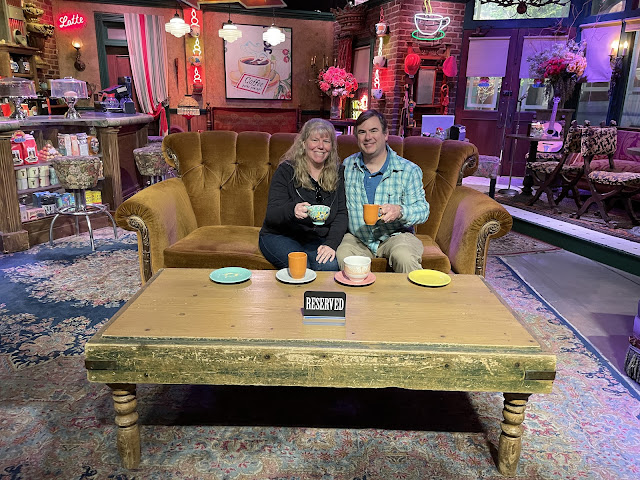


Colorado


This is an easy one. The best tour I've taken in Colorado is the Celestial Seasonings Tea Tour. I've taken the tour twice and loved it both times. It is so interesting seeing all the raw ingredients and learning how they are transformed into products ready to ship. My favorite part of the tour is the Mint Room, where mint explodes at your senses in the very best of ways.


Connecticut


We spent a full day in Connecticut doing a lot of fun things... but none of them were tours. My favorite non-tour activity was going to the Pez Visitor Center


Delaware


The best (only) tour we took in Delaware was a docent-guided tour of the Old State House. We enjoy taking guided tours of current and former Capitol buildings when we can, but the timing doesn't always work out. Fortunately, it did in Delaware. 


Florida


I've been to Florida at least 7 times, but I can only remember a single tour I've taken there. I was about 13 when we took a bus tour at Kennedy Space Center. On account of it being the only tour I've taken in Florida, it is now officially my favorite. I don't have a photo from our visit, so I'm using one of the media photos from their website. I don't remember it looking like this in the mid-80's, but it might have. I really don't remember much about it at all. 


Georgia


My favorite tour in Georgia was the 5-hour Atlanta City Bus Tour. Our guide was fantastic and we learned so much about the history and culture of Atlanta. Highlights of the tour included Martin Luther King Jr. National Historic Park, the Atlanta Beltline, Ponce City Market, and much more. 


That's the end of Part 1, Alabama through Georgia. I'll be back tomorrow with Part 2, Hawaii through Maryland!

11/26/24

State Bird Window Clings Using Gallery Glass (American Goldfinch and Northern Mockingbird)

After making diamond art ornaments featuring two of the state birds, I thought it would be fun to use a different medium to make another pair of state birds. These window clings of the American goldfinch and Northern mockingbird are made from Gallery Glass. They're currently on the window in my craft room - that's our neighbor's tree you're seeing through my window. Aren't they cute? Affiliate links below. 


Gallery Glass - Bird Window Clings


Materials: 


Steps: 


Draw a simple bird shape onto a piece of scratch paper, then position it under the workmat. Use the black leading to outline the shape. Let the leading dry completely (overnight is best). 

Use the paint to flood each section, much like you would when decorating a cookie with royal icing. I used a skewer to create a variegated color in both tails and the mockingbird's wing, but it dried a solid color so don't bother with that. 


Let the paint dry completely, again overnight. When it is dry, carefully peel the birds off of the workmat. Now you have a window cling that that will stay on the window until you peel it off. 

Here's a closer look at each bird. The mockingbird is the state bird of Arkansas, Florida, Mississippi, Tennessee, and Texas. 


The goldfinch is the state bird of Iowa, New Jersey, and Washington. 


It would be easy to adapt this project to make literally any bird. Give it a try!

10/21/24

50 State Quarters: Coloring Pages Using Crayola Crayons

I've finished four more 50 State Quarter coloring pages: Vermont, Maryland, South Dakota, and Florida. I went back to basics, as these are all done with Crayola crayons.


There's something relaxing and fun about coloring with crayons (good quality crayons, that is), but crayons are not the best choice for these specific coloring pages. It is really difficult to get into the small spaces, particularly the letters. Crayons don't blend well, so I struggled with trying to use the limited colors I have to create textures and shadows.  

Curious to see how other art materials have behaved on these coloring pages? So far, I've used: 
 It's been so interesting trying out different materials. I have some clear favorites, but I'm going to wait until I finish all 50 coloring pages before ranking my choices. It feels like I've been working on this for a long time (because I have) and I'm not even halfway through!

4/13/22

More Nests: Northern Mockingbird, Western Meadowlark, and Baltimore Oriole

I liked the American Robin nest craft so much I made three more! To make your own, follow the directions for the robin nest, with the following small modifications. 

---------

You will need a 13/16" template for the eggs of the Northern Mockingbird. Paint them a very pale greenish to bluish grey. When the paint is dry, use a stiff brush to pounce a bit of cinnamon colored paint on the eggs. The blotches should be very light at the pointy end and heavier on the rounded end.  

The Northern Mockingbird is the state bird of Arkansas, Florida, Mississippi, Tennessee, and Texas. 
 

---------


You will need a 1-3/16" template for the eggs of the Western Meadowlark. Paint them a creamy off-white. When the paint is dry, put brown paint on a stiff brush, then run your thumb across the bristles to splatter the brown paint onto the eggs. (Do this somewhere that brown paint splatters won't matter.) The splatters should be a bit heavier toward the rounded end. 

The Western Meadowlark is the state bird of Kansas, Montana, Nebraska, North Dakota, Oregon, and Wyoming. 


---------


You will need a 5/8" template for the eggs of the Baltimore Oriole. Paint the eggs a very pale grey. When the paint is dry, use a sharp brown colored pencil to draw squiggles onto the eggs as shown. The squiggly lines are more concentrated toward the rounded end. 

The Baltimore Oriole is the state bird of Maryland. 


---------

While doing my research on state birds, I came across an awesome shop that sells State Pride t-shirts that feature birds (affiliate link). That link goes to my state bird, the California Quail. I chose random states for each of the four birds' nests I made to feature below; if you don't see your state, follow this link to check yours out!