Showing posts with label Geography. Show all posts

2/26/26

CityQuiz

Have you heard of CityQuiz? The concept is simple: name as many cities as you can. It sounds easy, but it is surprisingly challenging. And quite addictive! There are several versions, but I focused on the US quiz. The interface looks like this: 


You think of a city, type it in the box, and then it appears on the map. Big cities have big dots and small cities have small dots. It keeps a running total of how many cities you've named and what percentage of the urban population that represents. You can save your progress and work on it for as long as you want. I chose a different strategy: I gave myself 24 hours, refrained from looking at anything (maps, old blog posts, etc) that would remind me of cities, and tried to name as many as I could. They came fast and furious at first, then I would think of a few more here and there. Looking at my map, you it's pretty obvious where I've traveled and where I haven't. 

As you can see, I named 550 cities, representing 32% of the national urban population. I'm pleased with that. Of course, as soon as my 24 hours were up, I thought of dozens more cities! More on that later. 

The vast majority of the cities I named are in California. That makes sense; I've lived here all my life. My second best state was Washington, where my parents grew up. We visited often. 


It would have been pretty embarrassing if I'd missed any states entirely since I've been to them all. I've been to almost all of the state capitals (not to mention I spent 11 years drilling them into the heads of my 5th graders) so there's no way I would have forgotten those. I'm pleased that I remembered all of the US cities over 500,000 and more than half of those over 100,000. 


If you're going to try CityQuiz, this is where you should stop reading. Or keep reading if you want. Consider the cities I mention to be a free gift toward your total. 


-----


-----


-----


-----


Here are the smallest cities and the rarest cities that I named. 


So what did I miss? 

The largest city I missed is Virginia Beach, Virginia. The largest city I missed that I've actually visited is Santa Ana, California. The most annoying city that I missed is San Bernadino. I KNOW that I added it, but I must have had a typo or forgotten to toggle the state to California or something like that. The largest city I missed that's on my list of Future Travels is Cincinnati, Ohio. That's pretty annoying too. 

Now check out this blog post by the creator of CityQuiz, Ian Fisher. 

5/19/25

GeoGuessr and Seterra

One of the most difficult (yet simultaneously most interesting) classes I took in college was Geography 10: The World's Regions. It took place in a large lecture hall… completely in the dark. All lectures were slide shows, where the professor taught us to look for clues in the photos to help us identify where the photo was taken. Tree shapes, soil color, architectural styles, and a zillion other things are all clues to a mystery location. It was absolutely fascinating and I loved every minute. That is, until it came time to study for exams. How do you take notes about tiny details in 150 different pictures from an hour-long slideshow in a room so dark you can't see your notebook? This was 1991, so we couldn't take notes on a laptop or take a video on a cellphone. The tests were conducted the same way as the lectures - the professor showed a slide and we had a minute to make our best guess where it was. Repeat, repeat, repeat. There was a single bank of lights on, so we could actually see to write. It was challenging, but I got an A, so whatever I did obviously worked. 

I didn't think much about that class until a number of years ago when I first discovered GeoGuessr. If you're not familiar with it, the concept is that you are dropped in a mystery location somewhere in the world on a Google Street View map. You look for clues about your environment and then you guess where you are. It's essentially exactly the same thing as we did back in that geography class. 


When I started playing GeoGuessr, it was relatively unknown. This educational and fun game has grown significantly since then, booming during COVID. Now it even has its own World Championship. It's not too often you find something equally popular with classroom teachers and esports players, but that is the case for GeoGuessr.  

If you're looking for other fun geography games, I recommend Seterra. Acquired by GeoGuessr in 2022, Seterra is packed with games and quizzes based on countries, capitals, flags, rivers, lakes, and so much more. There are so many games based on the United States that I have barely explored the rest of the world. Try this fun game about US landmarks and let me know how you did! 

5/16/18

Exploring Alabama Through Little Passports

The next state we visited virtually through Little Passports was Alabama. We learned so much about the Yellowhammer State, beginning with what a yellowhammer is! (It's a type of woodpecker, and is Alabama's state bird... although apparently its 'correct' name is northern flicker.) The first thing Trevor did was build the model. If you look closely, you can see a yellowhammer on the branch. 


We worked together on a challenging hidden picture puzzle about jubilees, the unexpected gathering of sea creatures close to the surface of the water along Alabama's Gulf Coast. I've never heard of this before and was eager to learn more. It turns out a jubilee happens when oxygen levels in the water are low. The animals swim close to the surface where oxygen levels are higher. Unfortunately for them, people fish them out with their bare hands! 

We learned that Alabama is famous for its humidity, with moist and hot summers, cool winters, and two tornado seasons (spring and winter). Trevor did an experiment to learn how the warm water along Alabama's Gulf Coast creates clouds. To try this experiment yourself, put warm water in a glass jar. Drop a lit match into the jar and immediately cover the top with the bag of ice. 


A cloud of water vapor will form. Remove the bag and the cloud rises out of the jar!


Next, we did an activity about Alabama's role in the Civil Rights Movement of the 1960's. It was inspired by the Wall of Tolerance in the Civil Rights Memorial in Montgomery, which sounds like a must-visit when we eventually make it to Alabama. Trevor and I brainstormed a big list of things he and I can do to make the world a better place and added our names to the Wall. 

We worked together on an activity about the Alabama natives, well-known for their pottery, river cane baskets, and wood carvings. Then we did a map activity about the Heart of Dixie. It was easy for Trevor, but my 46-year old eyes had some trouble distinguishing between very close colors in small print. Sigh. Getting older can be frustrating, but as they say, it beats the alternative. 

We solved logic puzzles about Space Camp at the US Space and Rocket Center in Huntsville. Then we used musical notes to reveal four genres of music important in Alabama's history. We looked at Alabama's timeline and read about famous events that happened in Alabama. Trevor solved a maze about Alabama's waterways. 

Finally, we did the cooking activity. 


We made Alabama cornbread in a cast iron skillet. It was tasty, but (hide your eyes, Southerners) we prefer our cornbread with sugar. And wheat flour. 


Trevor and I had a great time visiting Alabama through Little Passports and look forward to the day we'll explore the state in person!

5/9/18

Exploring Missouri Through Little Passports

Our next virtual trip through Little Passports took us to another state neither Trevor nor I have visited: Missouri. We'll make it there sometime between now and June 2024, of course! In the meantime, it was a lot of fun learning about the Show-Me State through science, puzzles, art, and cooking.

Trevor started by building the model of the Gateway Arch. 


He figured out a number maze using math to learn that the Arch, which stands 630 feet tall, is made of steel and concrete. Then he solved a challenging dot-to-dot of the state insect, the honeybee. Trevor used the Morse code alphabet to decode a message about Missouri's state song, the Missouri Waltz. 

Next, Trevor did a science experiment to learn how natural caves are created by water. Did you know that Missouri has more than 6000 caves, the most of any state? I had no idea. To begin, Trevor moulded white clay around sugar cubes to form a rough, rocky cone shape. 


He put his cave in a tray and covered it with dirt. 


He simulated rain using a watering can. 


After 30 minutes, we returned to look at the cave. Just like water dissolves layers of sedimentary rock to form caves, water dissolved the sugar cubes and left a cave made of clay. Neat! (Unfortunately, the cave reminds me of a monkfish. Anyone else see it?)


While waiting for his cave, Trevor worked on a jigsaw-puzzle activity about the Missouri River, aka The Big Muddy. As he worked, we reminisced about the sightseeing cruise we did along the Missouri during our Nebraska trip last summer. That was a really good trip.

We competed against each other, as we often do, to see who could find the most tornado-related words in the Missouri Word Twister. I won, but barely! We read about famous events in Missouri history, then Trevor completed a fill-in and unscrambling activity to learn about Missouri's state tree. It is the eastern black walnut, but in Trevor's messy handwriting it looks like he wrote 'eastern blue walrus' which totally cracked us up. I'm constantly on him not to be lazy when it comes to writing neatly, so it was a nice change to laugh about his bad writing!

We did a challenging hidden picture puzzle that had us finding animal species that live in the Ozarks. Then we learned more about the physical features of Missouri. We read about Kansas City's many fountains and solved a Venn diagram puzzle to find out the name of the only city in the entire world with more fountains than Kansas City (spoiler: Rome, Italy). I never would have guessed that Kansas City would have so many fountains!

Finally, we did a cooking project inspired by Missouri. The recipe in the State Journal is for fairy floss, served at the 1904 World's Fair in St. Louis. But we were more interested in another food that became famous after the 1904 World's Fair. Here's Trevor, adding vanilla to eggs, sugar, and salt. Can you guess what we made?


Did you say ice cream cones? If so, you're right! Well, sort of. It turns out that rolling searing hot wafer cookies into cones and pinching the ends is too difficult for both Trevor and me, so we pushed our hot cookies into muffin tins and made ice cream cone bowls instead. Much easier and much kinder on our fingers! And just as tasty.  


Trevor and I had a wonderful time together learning all about Missouri. Thanks, Little Passports!


5/4/18

Exploring Massachusetts Through Little Passports

Our family has spent exactly one day in Massachusetts, which is clearly not enough time to even get a taste of all that it has to offer. Fortunately, we were able to learn a lot more about the Bay State by taking a virtual trip through Little Passports. We started with a word search of Wampanoag words and their English translations. Then we played a game that was played by the Wampanoag at the time the pilgrims arrived in Plymouth. It's basically the same as this game that we've enjoyed before. 

Trevor was eager to do the science experiment, inspired by the many universities in the greater Boston area. In it, he learned how MIT alumni Herbert Kalmus and Daniel Frost Comstock developed Technicolor and changed motion pictures forever. To begin, Trevor cut out wedges of color from construction paper.


He glued them to a CD.


When the wheel spins, the colors blur to create new colors, much like Technicolor on rapidly-moving film strips. Neat!


Our next activity was a dot-to-dot inspired by Massachusetts sports teams- the Celtics, Revolution, Red Sox, Patriots, and Bruins. Then we worked on a logic puzzle featuring Cape Cod and the surrounding islands. Cape Cod is a great place for seeing humpback, minke, and fin whales. After identifying each, we used the letters to name the top predator in the Atlantic Ocean, the great white shark.

We read all about famous events that happened in Massachusetts and looked at the state's timeline. Then Trevor solved a puzzle about the Tanglewood Music Festival. He matched 4 famous Massachusetts authors to passages they wrote to decode the name of a fifth author's pseudonym. He did a crossword puzzle and solved a maze, both inspired by spots along the Freedom Trail.

Our final activity was to make Boston Cream Pie, the state dessert of Massachusetts. Rather than making one large cake, we tweaked the recipe to make cupcakes instead. Here's Trevor making the custard filling...


... and the chocolate glaze.


He split each cupcake, then filled it with custard, and topped it with glaze. 


They were delicious! This recipe is a keeper. 


As always, Trevor and I had lots of fun learning together using Little Passports!


5/1/18

Exploring Illinois Through Little Passports

Trevor and I are now 35/50 of the way through the Little Passports USA Edition and enjoying it just as much as when we started! Our most recent virtual trip took us to a state I've visited in person, but Trevor has not: Illinois. We started by learning about four of Chicago's skyscrapers and building a model of Chicago's skyline. Someday I want to take Trevor to Willis Tower. I went to the top in 1988, when it was Sears Tower and the tallest building in the world. They didn't have those glass boxes sticking out from the 103rd floor back then. I *think* Trevor and I would be OK stepping into them, but I know for sure that Steve would NOT be joining us! 

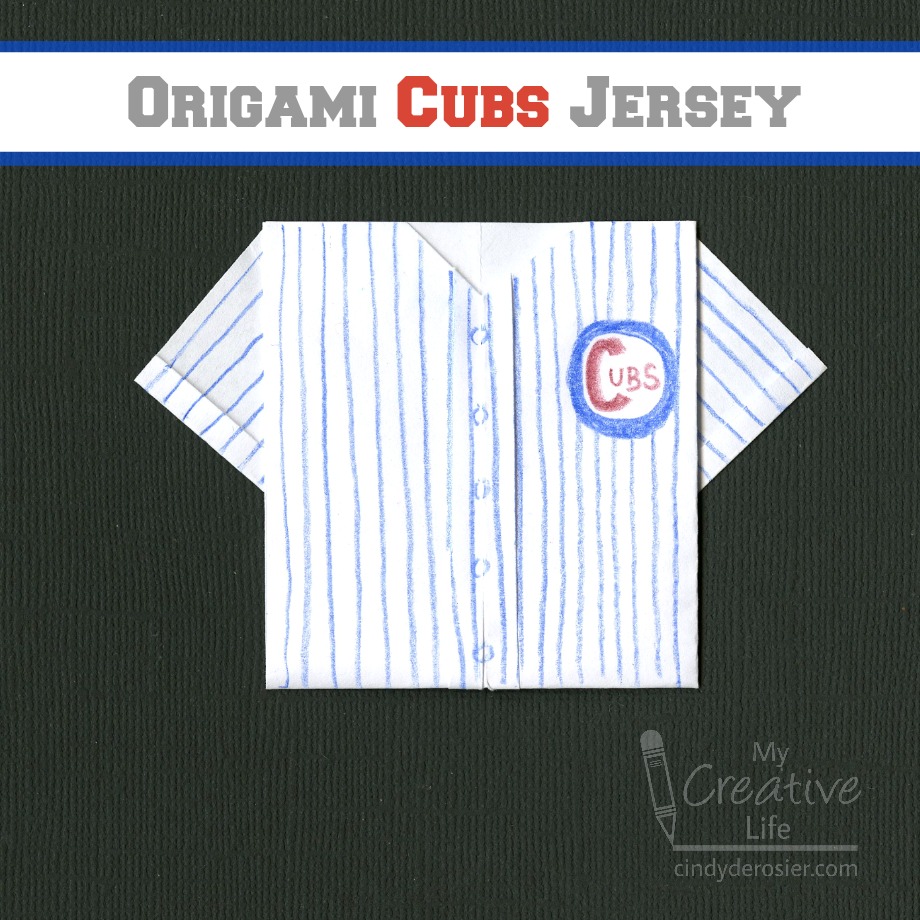
Next, we worked on the craft - an origami baseball jersey. Chicago has two baseball teams, so Trevor made one team's jersey and I made the other. Continue on to learn how to make your own!


---------

Origami Baseball Jersey


Materials:

  • white copy paper, cut into a square (ours were 5" x 5")
  • ruler
  • pencil
  • colored pencils

Steps:


Fold the paper in half horizontally, open it up, and then fold it in half vertically. Use the ruler to fold just the very edge of each side inward. Make sure to crease the folds well. 


Turn the paper over. Fold each side in so that they meet at the middle fold line. 


Fold the bottom half of each side outward to make a triangle, as shown below. 


Fold the triangles you just created backwards along the fold line that's already there. 


Fold in the top corners of the jersey to create a v-neck collar. Now it's ready to decorate! To make the Cubs jersey, draw a blue circle on the player's left. In red, add a large C inside the circle, then add a smaller UBS next to the C. With the blue pencil, draw buttons down the placket. Finally, use the ruler to add vertical stripes.


Here's Trevor decorating the White Sox jersey. He used a regular pencil, but you may prefer a black colored pencil. 


Draw the Sox logo on the player's left. Add buttons down the placket. Finally, use the ruler to add vertical stripes.


Obviously, you could decorate your jersey with whatever team you like. We live in the Bay Area, where the Giants and A's are the hometown favorites. 

Our next activity in the Little Passports State Journal was a Sodoku puzzle that taught us fun facts about Chicago. We solved a logic puzzle inspired by the Cahokia Mounds in Collinsville, Illinois, believed to be one of the first Native American cities. We read about the Mazon Creek fossils, including the Tully Monster, first discovered in 1958 and now the state fossil. Speaking of the state fossil, the next activity was a hidden picture puzzle featuring Illinois' other state symbols. I love that the official Illinois State Snack Food is popcorn (and I love that they have an official snack food!).

Trevor did a dot-to-dot about President Abraham Lincoln (who spent many years living in Illinois and is buried in Springfield). Then we learned that Ronald Reagan was born and raised in Illinois. There are a lot of places in the state that celebrate his life. We did a clever overlapping word search, then inserted the words we found into a story about Reagan's life.

We read all about the important events in Illinois history, looked over the timeline, and then solved a puzzle about the Route 66 attractions in Illinois. And then it was time to cook. The recipe? Deep-dish pizza! YUM!


We had such a good time on our virtual journey through The Prairie State and I look forward to eventually taking Trevor there. Thanks again, Little Passports!


4/26/18

South Dakota Badlands Painting

This post contains affiliate links. 

After completing the South Dakota Little Passports kit with Trevor, I was inspired to create this:


---------

South Dakota Badlands Painting


Materials:


Steps:


You can make your painting any size, but I chose to cut down my paper to about 6" x 9". That's the size I'd do in a classroom setting so that the paper is small enough to focus on detail.

Begin by brushing water onto the paper with horizontal strokes to lightly moisten the paper (the goal is moist, not wet). I LOVE using the water brush - nothing to spill and perfect water flow every time. Add swipes of blue across the top, browns across the center, and golden tans and hints of greens across the bottom.


The paint should dry very quickly if you haven't used too much water. If the paper is still wet, wait. When it is dry, add horizontal lines of color along the center section, then build up the mountains. Use light browns, golds, rusts, creams, and related shades. You're trying to mimic the sedimentary rock of the Badlands


Lightly sketch the shape of a bison (I'm trying to break my bad habit of calling it a buffalo) in the bottom section of the paper. 


Fill it in with brown paint, dark for the body and lighter for the horns. 


Now add a streak of yellow to the sky and shadows to the left sides of the mountains. Create brush in the foreground using golds and greens. When everything is dry, use colored pencils to fix any gaps (I smoothed my mountains a bit) and then add eyes and a nose to the bison.


It looks like a beautiful place to visit. Someday!

4/23/18

Exploring South Dakota Through Little Passports

Trevor and I continue to have a great time together learning about the 50 states using the Little Passports USA Edition! Our next virtual trip took us to South Dakota, home of (among other things) the world's largest collection of mammoth fossils. Here's Trevor building the model of a mammoth. 


Trevor thought it would be funny to pose the mammoth as though he were studying the Little Passports state journal. He was right. It was funny. 


We read about Mt. Rushmore and learned that each face is 60 feet tall. It took 14 years to carve them! After a matching activity about the four presidents on Mt. Rushmore, we solved a rebus about Badlands National Park. (I just had a flashback to when I was in 5th grade. Our class put on a play called 'Badlands Ballyhoo.' I remember literally nothing about it except the title and that we had a lot of fun. Any elementary school friends reading who can help spark some memories?) 

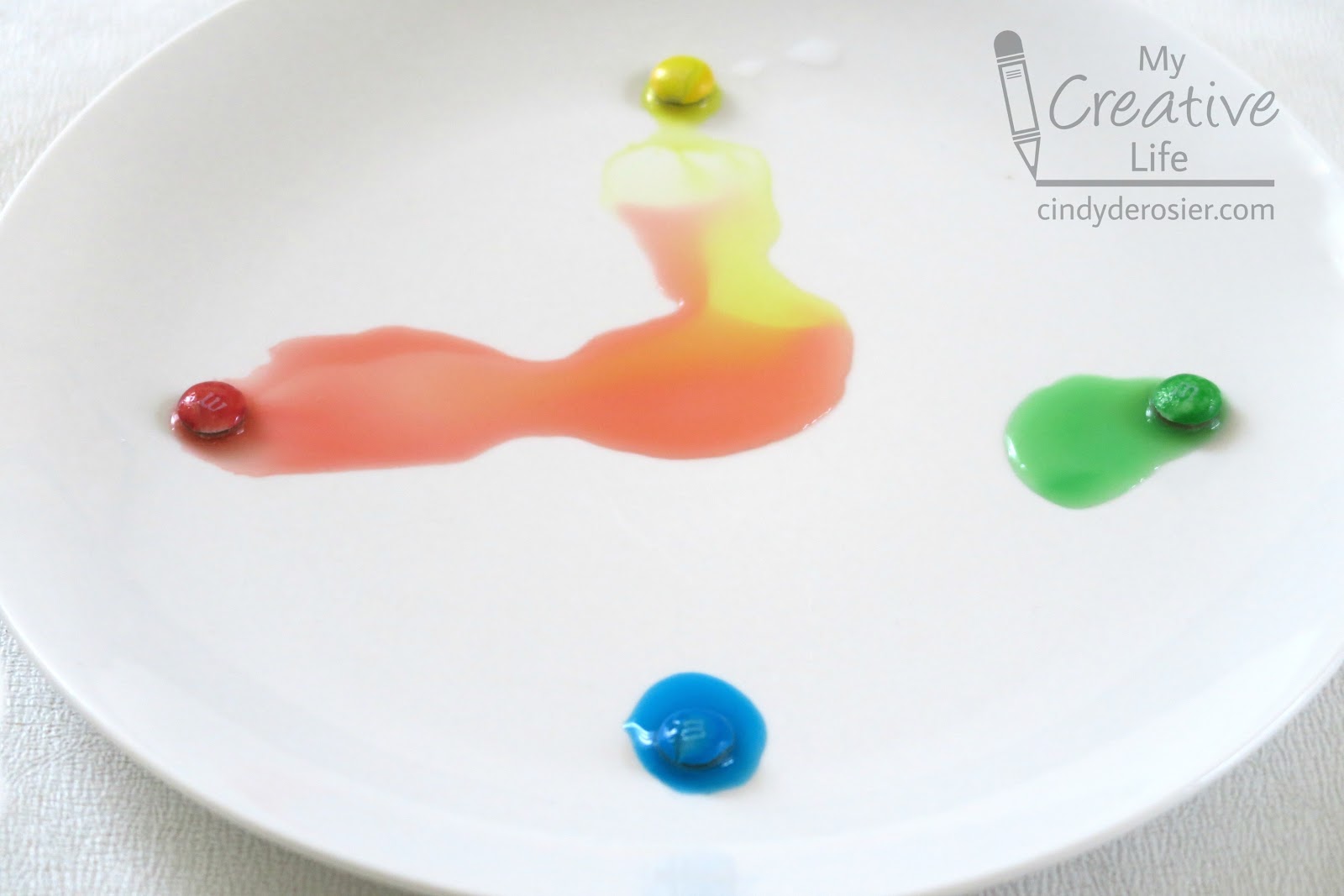
We learned that the Badlands are famous for their multicolored rock formations, shaped by water and wind millions of years ago. And, of course, erosion continues to shape the landscape. To learn how, Trevor did an experiment. He put four colored candies at opposite ends of a plate. He used an eyedropper to put 10 drops of 'rain' on the blue candy, 20 drops of 'rain' on the green candy, 30 drops of 'rain' on the yellow, and 40 drops on the red.  


We left the plate untouched for 15 minutes. When we returned, it was evident that the 'rain' had caused erosion. The candies (representing rocks) that got the most rainfall dissolved more than those with less rainfall.


Trevor solved a dot-to-dot activity about the Lakota and Cheyenne natives of the Black Hills. Then we solved a logic problem about Belle Fourche, a small town with the nickname of "Center of the Nation" because it is near the geographic center of the US. We did a fill-in puzzle about L. Frank Baum, who wrote The Wizard of Oz while living in Aberdeen, SD. I'd always assumed he'd written it in Kansas, but apparently I was wrong! We read about the famous events in South Dakota history and marveled at the Corn Palace, first built in 1892. It's on our must-visit list when we eventually make it to South Dakota. I love quirky stuff like that.

We did another logic activity, this time inspired by Custer State Park. It is home to bison, pronghorn, mountain goats, deer, elk, and burros. The burros are famous for standing in the road to stop traffic and beg for treats. Pretty smart, those burros! 

Speaking of treats, the South Dakota recipe was for kuchen. Yum!


We had such a good time on our virtual journey through the Mount Rushmore State and look forward to eventually traveling there in person. Thanks again, Little Passports!


4/11/18

Exploring Tennessee Through Little Passports

Time to explore another state through Little Passports! This time it's Tennessee, the Volunteer State. Trevor started by building the model of a country music stage. 


Not surprisingly, many of the activities in the Tennessee State Journal were inspired by music. We solved a puzzle to learn the names of Tennessee's official state songs. Yes, plural. They have ten! Even stranger, two of them have the same name ("Tennessee"). The craft was an Elvis-style white cape. The science activity had us making a guitar from a cereal box to explore how vibrations create sound. Trevor was not interested in an Elvis cape and has done the cereal box guitar many times, so we worked together to come up with a craft that combined the two activities into something else... a record player! (This craft would be great for a study of Mississippi, too, as that's where Elvis was born.)


Record Player Craft


Materials:

  • 2 cereal boxes
  • compass
  • black paint
  • scissors
  • construction paper
  • glue
  • pens

Steps:


Set one cereal box aside. Cut the other open and use the compass to draw a circle that reaches the edges of the chipboard. Paint it black, making the brush strokes go around the circle to mimic the grooves in a record. Let the paint dry completely, then cut out the circle.


While the black paint is drying, use the compass to draw a 3" circle on yellow construction paper. Cut it out, then use the black pen to copy the record label of your choice. Since we were inspired by Elvis, we with went his first single with Sun, 'That's All Right." Glue it to the dried record. 


Cover the intact cereal box with brown construction paper.


Cut a sheet of white construction paper 2" shorter than the length and the width of the front of the cereal box. Glue it in place, leaving 1" margins on all sides. Cut grey construction paper to make the record player arm and glue it to the right side of the white paper. Add two small circles of grey to the bottom left. Label one VOLUME and one POWER. Add a red dot in the center of the POWER button. 


Now place your record on top.


It'd be fun to set this on a table during a party with a bluetooth speaker (affiliate link) hidden underneath so that it sounds like the music is actually coming from the record player. In fact, we did something on a bigger scale for the awesome National Craft Month party I hosted in 2011. That was quite an event!

After making our record player, Trevor and I learned about the animals that live in the caves of Tennessee. I had no idea, but Tennessee has more caves than any other state- over 9000! Next we did a hidden picture puzzle based on Raccoon Mountain Caverns. 

We worked on an anagram activity inspired by the Knoxville Biscuit Festival. (Note to self: Attend Knoxville Biscuit Festival someday.) Then we read about famous events in Tennessee history and matched famous Tennesseans to their accomplishments and the years they were born. We learned about 'The Athens of the South" and the birds that make their home in Great Smoky Mountains National Park. Did you know it is the most visited national park? I had no idea.

The cooking project for Tennessee was Moon Pies. Yum! Here is Trevor making the cookies for our moon pies. 


He sandwiched the cooled cookies around a delicious marshmallow filling...


... then dipped the cookies into chocolate. 


Our homemade Moon Pies were outstanding! The recipe is definitely a keeper. Thanks, Little Passports! Trevor and I had a great time learning all about Tennessee and can't wait to visit someday.