Showing posts with label Book Review. Show all posts

8/1/25

Cookbook Review: Empanadas

I love empanadas. Is there anyone who doesn't? They're flaky packages of fried dough with a tasty filling inside. What's not to love?! So when I was asked to review Donna Kelly's new cookbook Empanadas (affiliate link here and below), I was quick to say yes. I'm happy to report that I love the book as much as I thought I would. 


Kelly's book begins with an introduction to empanadas, then offers recipes for different types of empanada dough: fried, baked, masa, and "shortcut" (using prepared tortillas). There are instructions for filling and sealing empanadas. Then, it's on to the fillings. 

The filling options are divided into five categories: Latin Flavors; American Style; Around the World; Celebrations; and Sweet Treats. Each category has a bunch of ideas that sound absolutely delicious. There are also some dipping and drizzling sauces. The photographs throughout the book are gorgeous and made me want to try every single recipe, as soon as possible. 

Obviously, I was not going to be making all 60+ recipes for this review, so I picked one dough (fried) along with one savory filling (Mexican Street Corn, from the Latin Flavors section) and one sweet filling (Cinnamon Apple Pie, from the Sweet Treats section). I made the dough first, since it had to rest in the refrigerator. Then I whipped up my two fillings and let them cool. Both were delicious. (Yes, of course I tasted the fillings before forming the empanadas.) The directions were clear and easy to follow, even for empanada novices. 


I rolled and cut the dough, filled it, and then sealed my empanadas. Kelly describes two different techniques for sealing, so I used one for each of the two fillings. That way I could tell at a glance whether each empanada was sweet or savory. 

Then I asked our family frying expert to handle the final step. Steve is far more patient - and skilled - than I am when it comes to frying. 


He did a beautiful job. Every empanada came out a gorgeous golden brown. 


Here is a Mexican Street Corn empanada. 


This is a Cinnamon Apple Pie empanada. 


All three deRosiers gave both recipes two thumbs up, for a total of six thumbs. I can't wait to try more recipes from Empanadas

3/6/25

15 Minute Watercolor Masterpieces

The next thing I painted using my new Kuretake Gansai Tambi was this set of colorful planets. 
 

This project, called "Colorful Planets," is from the excellent book 15 Minute Watercolor Masterpieces by Anna Koliadych (affiliate link). The book has chapters about watercolor techniques, supplies, and tips, but the bulk of the book consists of detailed, step-by-step tutorials for fifty 15-minute projects. They are divided into categories by subject: Beautiful Landscapes; Dreamy Galaxies; Elegant Plants and Foliage; Flowers; Fruits and Sweets; Adorable Animals; and Fashion. The projects are beautiful, the instructions are great, and I definitely recommend the book.

I do not, however, recommend that you use gansai for these projects. I really struggled to get the beautiful blooms and blends that Koliadych described. When I touched the tip of the brush to the wet paper, the paint didn't spread like she said it would. At the time, I hadn't yet researched the gansai and didn't realize it's formulated specifically NOT to bloom, blend, or spread. Oops. I do love the richly pigmented colors in my project and the little bit of variegation I was able to get, particularly in the background. But I'll be using my favorite actual watercolors for any future 15 Minute Watercolor Masterpieces I make. Lesson learned!

12/3/24

The Fascinating Stories Behind California’s Place Names

My mom and I are both learning Spanish on Duolingo. We were talking about how many Spanish place names there are in California and how it would be interesting to learn about the origins of all the place names. It turns out my local library has a number of interesting books on the subject. I checked out two: California’s Spanish Place Names: What They Mean and the History They Reveal and California Place Names: The Origin and Etymology of Current Geographical Names. Affiliate links here and below. 


The two books are both fascinating yet very different, making them good companions for each other. California’s Spanish Place Names is essentially a detailed narrative history of California, starting with Spanish exploration in the 1500’s. It’s a book you’d read cover-to-cover (which I did). California Place Names is a reference book, with an alphabetical listing of places that includes a pronunciation guide, etymology, and interesting facts. You certainly COULD read it cover-to-cover, just the way you could read a dictionary that way. But considering that it is 467 pages long with an average of 20 entries on each page, I’m guessing most people look up specific places they’re curious about. 

If you're interested in the topic, I recommend getting your hands on one or both of these books. Here are some things I found particularly interesting: 
  • Place-name scholars are called toponymists. 
  • All place names can be classified in five basic groups. These include: 
  1. Descriptive. Examples include: Palo Alto (tall tree), Sausalito (small willow grove), Arroyo Seco (dry creek), La Brea (tar)
  2. Dramatic. These are named for memorable events or occurrences, like Calaveras (skulls), CaƱada Verruga (wart valley), Oso Flaco (lean bear).
  3. Commemorative. This includes `everything in California that starts with San/Santa (saint), as well as places like Martinez, Amador, Vallejo, Benicia, which are all first or last names.
  4. Transported. Alhambra, Cordova, Malaga, Sonora are all place names in Spain or Mexico.
  5. Contrived. These made-up places sound Spanish, but they're not. Examples include Calexico, Buena Park, Mar Vista, Asilomar, Calistoga, and Coalinga. 
  • Early colonists named plenty of places using names or descriptive titles from Spanish, but they also took the existing names the indigenous population used and recorded them using the Spanish phonetic system. That's where we get place names like Tuolumne and Napa. 
  • Modern developers, business owners, and government officials often use Spanish names for housing developments, motels, recreation areas, marinas, etc. even when there’s no other connection to anything Spanish. In college, I lived in an apartment complex named ‘Hacienda del Sol’ that was not a ranch nor any sunnier than surrounding apartment complexes (some of which also had Spanish names). It did not have Spanish-style architecture or anything else to justify the name other than that it sounded good. 
  • Of California’s 58 counties, 32 of them have Spanish names. This includes two of the three counties in which I’ve lived. (Alameda means ‘grove of shade trees.’ Solano is much more complicated. It was named for Francisco Solano, chief of the Suisun tribe, baptized at Mission San Francisco Solano, who in turn was named for the 15th century apostle Francis Solanus). The third, Yolo, is the Spanish version of the name the native people called the area, meaning 'place abounding with rushes'. California itself is a Spanish place name, as is its capital, Sacramento. Almost all of our major cities have Spanish names. 
  • The color that appears in the most place names in California is black. Second is red. Third, white. Most of the ‘Black’ place names are Mountains (over 100), Peaks, Hills, Buttes, and Canyons. They’re not actually black, of course. They appear that way because of the geologic feature, the dark chaparral, and/or atmospheric conditions. 
  • Strawberry appears in more California place names than any other fruit, by far. 
  • Some Spanish place names sound a lot more appealing if you don't know their translations. Examples: Atascadero (place where one gets stuck in the mud) and Manteca (Lard).

Obviously, it's not just California that has interesting place names. Literally every other state (and country) does as well. Check out this list of the most difficult to pronounce cities in each state - I bet there are some interesting stories behind each of them as well. 

9/16/24

It. Goes. So. Fast.

Tomorrow is a big day in the deRosier house. Not just big - huge. Trevor is moving into the dorms at UC Davis. Our only child is going to his top-choice university to study what interests him most in life. He has wanted this for so long; we've wanted it for him even before he knew what a university was. We are thrilled for him and so, so proud. 

But there are other emotions too, of course. Sending your child out into the world is hard, in so many ways. Somehow, 18 years has flown by. My baby is an adult. How?! 

Mary Louise Kelly, host of NPR's All Things Considered, gets it. I just finished listening to her memoir, It. Goes. So. Fast. I loved it. Affiliate link here and below. 


In terms of parenting experiences, Mary Louise Kelly and I don't have a lot in common. She was reporting on war zones during her children's early years; I was a stay-at-home mom, spending my days with other moms at parks and libraries. Her kids had a nanny; Trevor literally never had a paid babysitter. In their teen years, Kelly was live on the air when her kids got out of school; I volunteered at the school and picked Trevor up from school every day. But we both love our children with our whole hearts and we both now know firsthand how quickly the time with them flies by. 

Kelly's book is as much about her career as it is about being a mom, because the two are intertwined. And honestly, if her memoir wasn't about parenthood at all, I would still have loved it. She's had a fascinating career and is such a gifted storyteller. I usually recommend printed books, but in this case, get the audiobook. Hearing her words in her own voice is powerful, especially when she is talking about her sons. Pure love. 

2/6/24

The Youngest Heroes of the Civil Rights Movement

If someone asked you to name one of the heroes of the Civil Rights Movement, chances are good you'd mention Martin Luther King, Jr. or Rosa Parks. Perhaps John Lewis or Medgar Evers or Fannie Lou Hamer would come to mind. All of these adults made important contributions in the fight for equality. 

Not all who struggled for equal rights were adults. Countless children joined their parents, teachers, and religious leaders to stand up against discrimination. Today I want to focus on some of those young heroes. Below, you'll find my recommendations for kid-friendly books you can use to help the children in your lives better understand the courage of these young freedom fighters. You can find many of these books at your local library; I've also included affiliate links throughout this post if you prefer to purchase the books.

I'm going to start with one of the most famous young heroes: Elizabeth Eckford. When she was 15, Eckford was part of the Little Rock Nine who integrated Central High School in 1957. Her story is told in her outstanding book, The Worst First Day: Bullied While Desegregating Central High. Not only is the story powerful, but the illustrations are as well. 


The book Why Did Grandpa Cry? is about Central High School student Ken Reinhardt. Reinhardt, who was white, stood up for Elizabeth Eckford and the Little Rock Nine. This book makes an excellent companion to Eckford's and reinforces the importance of being Upstanders. 


Ruby Bridges is another brave child who, at six, integrated her previously all-white elementary school in Louisiana. Her book I Am Ruby Bridges is a best-seller. I highly recommend it. 


Have you heard of Susie Clark? Her story of integrating Iowa schools in 1868 is told in verse in Susie Clark: The Bravest Girl You've Ever Seen. I was sent a promotional copy for Black History Month. I'm so glad for the introduction to this unsung hero, who fought for equal rights long before the Civil Rights Movement of the 1950's and 1960's. 


Of course, integrating schools was not the only way children made a difference in the Civil Rights Movement. Over a thousand Black children in Birmingham, Alabama volunteered to march for their rights in the Children's Crusade in 1963. You can read about their story in Let the Children March


Learn the fascinating story of Audrey Faye Hendricks in The Youngest Marcher. At age 9, Hendricks was the youngest known person to be arrested for a civil rights protest. 


The Greensboro Four were teenage college freshmen when they chose to engage in peaceful protest by sitting at the 'whites only' lunch counter at Woolworth's. I'm a fan of Andrea and Brian Pinkney and Sit-In is fantastic. 


Teenager Claudette Colvin refused to give up her seat on a segregated bus in 1955 and was arrested... nine months before Rosa Park's famous arrest for the same reason. Read about her fascinating story in Because Claudette


I could go on and on, but I'm going to wrap up this post with another Upstander. Joan Trumpauer Mulholland was a white teenager who was one of the Freedom Riders in 1961. Two years later, as an adult, she was the first white person to join in the Woolworth's lunch counter sit-ins in Jackson, Mississippi. Learn more in She Stood for Freedom


While these books are great to share with kids during Black History Month, they're just as important during the other 11 months of the year. Black lives matter. Black kids matter. Black history matters. All year long. 

9/13/23

In My Sketchbook: Friend Want Ad

This is the latest project in my sketchbook. I call it a "Friend Want Ad" because it highlights all the characteristics I most appreciate in a friend. 


As you can see, I'm always on the lookout for happy, thoughtful, ethical, generous, honest, smart, funny, creative people to add to my group of friends. And, apparently, I'm looking for neat, curious, practical people. I accidentally put all three of those words twice. 

This is a fun project to do with kids because it's so interesting to see what words they choose. You may be thinking that everyone wants friends who are fun, kind, and nice, but once you look closer, you start to see words that don't appear on everyone's list. For example, I included the words careful, calm, and practical. Spending too much time with daredevils or highly energetic or impractical people both stresses me out and exhausts me. I want to spend time with interesting, responsible, well-read people. On someone else's Friend Want Ad, you might find words like active, social, outgoing, crazy, spontaneous, athletic, brave, wild, mysterious, trendy, extroverted, imaginative, rustic, solemn, or zany. All positive attributes, but not the best fit for me. 

This project actually started when I was reorganizing my paint storage shelves to include the newest colors from Plaid. I ended up with a fun mix of colors on my desk and used them to paint random swatches in my sketchbook. At this point, I had no idea what I'd be doing with this spread.


And then, the Freehand Lettering Guidebook (affiliate link) showed up in the mail. They'd contacted me about reviewing it back in June; I'd forgotten about it by the time it arrived. But it turned out to be just the inspiration I needed to do something with the paint swatches. 

The Guidebook starts with an introduction to hand lettering, with tips about the various media and substrates used for lettering. The first two chapters provide examples of alphabets written with fine, medium, and broad pens. Chapter 3 has examples of open face letters and Chapter 4 has script letters. Chapter 5 is all about setting, transforming, arranging, and decorating text. 

After reading the introduction and flipping through the rest of the Guidebook, I grabbed some colored pencils and jumped in with adding words to my painted pages. Each word is inspired by a different alphabet from the book. I had different levels of success drawing them with colored pencil over paint. And I didn't plan out any of the words in advance, which explains any wonky spacing and repeated words. All part of the charm, right? 


This was a fun project to do. I can see myself playing around with both the Friend Want Ad concept as well as the many alphabets in the Freehand Lettering Guidebook!

2/24/23

My Favorite Travel Memoirs

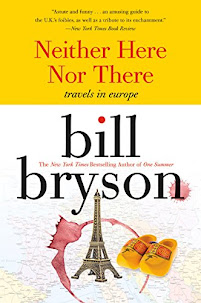
I just finished reading the excellent memoir 360 Degrees Longitude by John Higham. It's the story of a California family (a married couple and their kids, age 11 and 8) who took a year off from their jobs/schools to travel eastward around the world. They had some challenges along the way, including one that completely derailed their plans. Affiliate link here and below.  


My favorite genre of book, by far, is memoirs. I love learning about other people's lives and experiences, particularly when they are completely different than my own. I especially love travel memoirs, as they introduce me to places I definitely want to visit and allow me to vicariously experience places I almost certainly will not actually visit. The Higham family in 360 Degrees Longitude travels very differently than our family does, so even if I do end up visiting the places featured in the book, I will not be seeing them in the same way. Reading other people's travel stories is fascinating to me. 

There are so many travel memoirs I've enjoyed over the years. I couldn't possibly list them all, but here is a sampling. They're all quite different. Each book is linked so you can read a description if you're interested. 


Do you have any favorite travel memoirs? I'd love to hear what they are. Please list them in the comments!

2/9/23

Library Roulette, Class 700: How to Draw Kawaii Vegetables

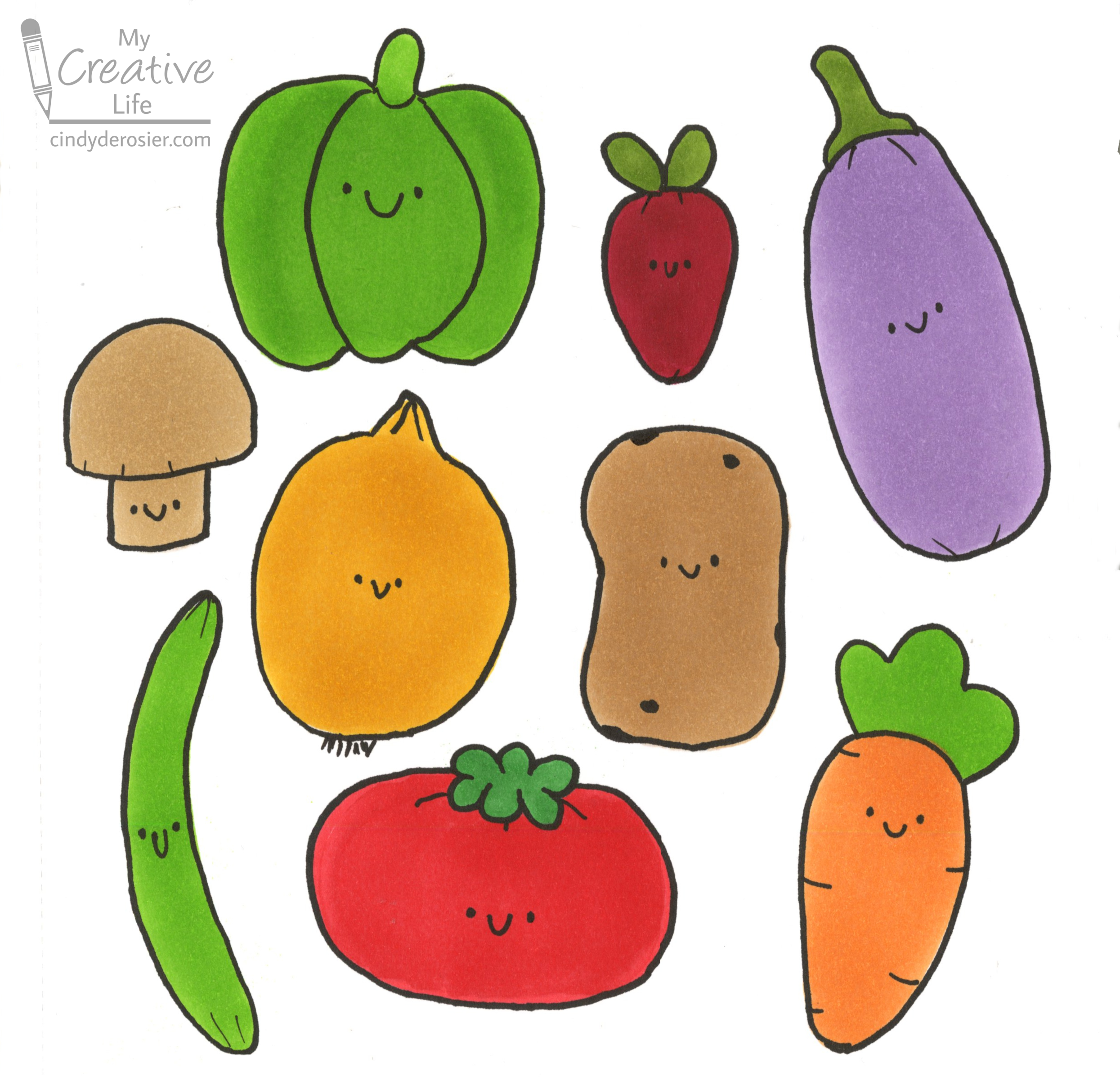
For the fifth (and final) craft in my Library Roulette Class 700 project, I drew vegetables. Cute vegetables, that is. 


This time, my random number was 745, the category for Decorative Arts. I chose the book Crafting Cute: Polymer Clay the Kawaii Way by Dani Banani. (Affiliate link here and throughout the post.) The book begins with an introduction and an explanation of kawaii ("cute" in Japanese) and chibi (an exaggerated, minimalist drawing style). Next is an excellent explanation about working with polymer clay. The rest of the book has detailed instructions to make 50 adorable anthropomorphized projects using polymer clay. The writing is excellent and the many step-out photos make this a great book for beginners. 

Rather than work with polymer clay, I opted to take inspiration from the Pickle Charm project to draw kawaii vegetables. 


Looking at this project and the others in the book (the finished clay pieces, not the illustrations), I identified characteristics of Banani's work that I wanted to include. 
  • projects are done in a solid color, in a lighter shade than the real item would be
  • the proportions are shorter and squatter than in reality
  • all edges are rounded
  • details are minimal or non-existent
  • the faces consist of a tiny smile and two dots, done in black, and lined up with each other

This project gave me the perfect opportunity to test out the Marker Sketchbook I received from Ohuhu. The smooth, heavyweight paper is designed specifically to use with Ohuhu markers and they colored like a dream in this sketchbook. 

I started by putting vegetable-shaped blobs of color onto my paper, trying to keep them short, squat, and rounded. I started with the carrot and eggplant (since I'm left-handed). I didn't plan ahead with overall placement; the next vegetable I drew was whatever fit nicely into the remaining space I had, both in terms of space and not repeating a color. The mushroom and the bean were last, since I hadn't left myself much room in the left-hand side!

Then I used a Black Honolulu to add faces. I outlined each vegetable, then added tiny lines to imply dimension to the carrot, eggplant, radish, tomato, mushroom, and bean. I made full lines on the bell pepper - in retrospect, I wish I hadn't. I added small lines to both the top of the onion and the root end. Finally, I added a few small spots on the potato. 


I've really enjoyed trying to mimic different artists' styles in the past and this was no exception. I've never drawn anything with a kawaii and/or chibi style, so it was fun to try something new. The happy vegetables make a great first page in my new marker sketchbook. Every time I work in it, I'll have these smiling faces greeting me!

2/8/23

Library Roulette, Class 700: Northern Lights Painting

For the fourth craft in my Library Roulette Class 700 project, I painted the Northern Lights. 


This time, my random number was 751, which is the category for Painting Techniques, procedures, apparatus, equipment, materials, forms. The book I selected is Color Harmony for Artists: How to Transform Inspiration into Beautiful Watercolor Palettes and Paintings by Ana Victoria Calderón. 


It begins with an introduction to color theory, then the bulk of the book consists of two-page "Inspired Palettes" spreads. These are divided into categories: Notable Art Movements; Expressive Skies; Colorful Cultures; Animal Wonders; Cities, Towns, and Destinations; Influential Eras; Remarkable Landscapes; Florals and Still Life; Mineral Riches; and Human Hues. For each spread, the left page has an introduction and a photograph. The right page has a large palette inspired by that photograph and a smaller painting below. 
 

This book is absolutely beautiful. I love flipping through it and seeing all the inspirational palettes. It was very difficult to select just one palette for my Library Roulette project, but something about the Northern Lights stood out to me. Probably because I had just discussed tentative plans with my sister for a family trip to Iceland. Honestly though - I could have picked a page at random and happily painted whatever was there. 

While this book is positively packed with inspiration, it is not an instructional book. You won't find any step-by-steps or helpful hints. For that, you're on your own. I don't really know what I'm doing with watercolors, so my attempts to paint the Northern Lights ended up a bit muddy as I tried to layer colors and blend them. 

Here's a look at my process. I started by taping off a page in my sketchbook, then swatched colors from my favorite watercolor set


Then I did a basic undercoat. Rather than rinsing away the excess paint, I just put it on the right-hand page. No plan or goal. 


When that was dry, I sprayed some white mist for stars, then added a simple foreground. I don't really like the results, but that's ok. I really enjoyed the book and might try the Northern Lights project with acrylics, which are easier for me than watercolors. Maybe I won't. Either way, it was fun, I discovered a great new book, and I learned something, so mission accomplished. 

1/19/23

Library Roulette, Class 700: Adventures in Improv Quilts

For the second craft in my Library Roulette Class 700 project, I made this paper quilt using patterned papers from a Valentine's Day collection (affiliate link here and below). 


The book I chose for 746 (Textile Arts) is Adventures in Improv Quilts. As you know, I'm not a quilter and almost never do fabric crafts, but it didn't matter. I LOVE this book. I learned so much about improv quilts and how they are made through the well-written text and plentiful photos. 

Pretty much all of the exercises, tips, and tricks that are intended for designing with fabric are applicable for designing with paper. The guided exercise I tried was called Retro Circles. 

I chose four coordinating papers and cut them each into 4" squares. 


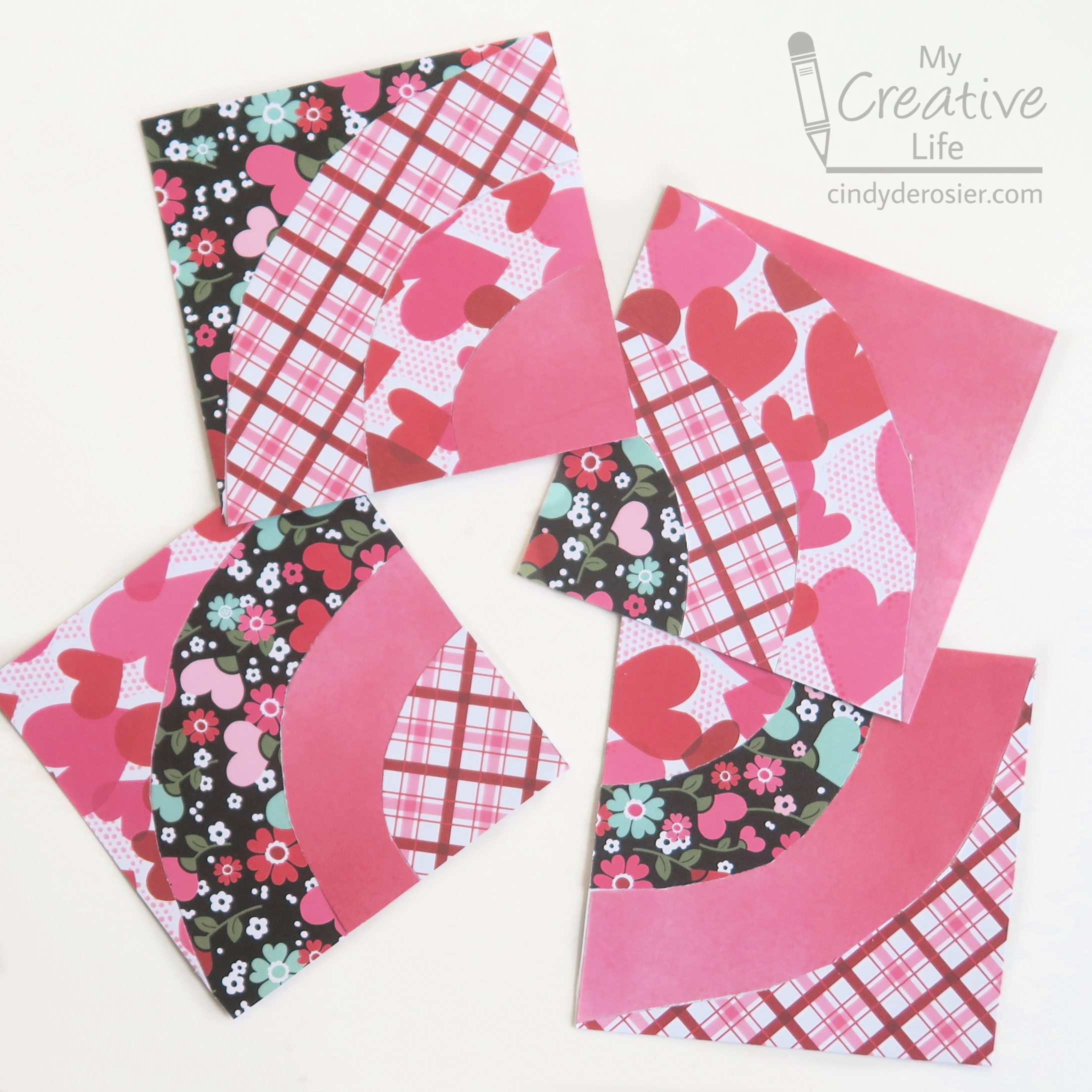
I stacked the papers and cut three gentle curves. 


Then I shuffled the cut pieces and created four blocks, each with one of the four papers. When working with fabric, you chain piece them together. Paper is so much easier - just glue the pieces to a 4" background.


I repeated that process three more times to give me a total of 16 squares. Then it was time to arrange them. I played with a lot of different possibilities....


..... before settling on this one. Then it was just a matter of gluing the squares to a 16" background. 

Obviously, with fabric you would go on to quilt it. With paper, that isn't necessary. But it could be a lot of fun. I'm strongly considering making another paper quilt and experimenting with both real and faux stitching. 

This was such a fun project! There are so many other fun ideas in Adventures in Improv Quilts that I would like to try in paper.